Remote audio
Hear the remote computer's sound during Fluid sessions. From a Mac, you can also send your microphone to a remote Mac. Use it to follow a video playing on the remote computer, or to talk into an app on a remote Mac.
Applies to
- Remote computer: Windows, macOS, or Linux (beta) running Jump Desktop Connect, connected with Fluid.
- Hear remote audio: Jump Desktop on Windows, macOS, iPhone, iPad, and Android, and in a web browser.
- Send your microphone: Jump Desktop on macOS, connected to a Mac.
Hear the remote computer
- On a remote Mac, allow Connect Microphone access. Connect uses it to capture the Mac's sound. See Grant macOS permissions to Connect.
- In Jump Desktop, turn audio on:
- Windows: in the computer's settings, Sharing > Play Audio
- macOS: in the computer's settings, Sharing > Play Audio on Mac
- iPhone and iPad: in the computer's settings, the audio switch
- Android: tap the wrench button in the session toolbar and clear Mute Sound. This also sets Start Sessions Muted in Settings, so later sessions start the same way.
- Web browser: in the settings drawer, Sharing > Audio
Audio is on by default for new Fluid computers. Team administrators can turn it off with the Audio Streaming setting in a Connect Configuration.
Where the sound plays on a remote Windows computer
Connect copies the sound from the Windows computer's default output device without muting or switching it. You hear it on your device, and it keeps playing on that output device on the remote computer.
Where the sound plays on a remote Mac
When you connect, Connect switches the Mac's sound output to Jump Desktop Audio so it can capture it. You hear the sound on your device, and the remote Mac's speakers are silent. When the last session disconnects, Connect restores the previous output device.
Hear sound on the remote Mac too
On the remote Mac, while connected:
- Open Audio MIDI Setup.
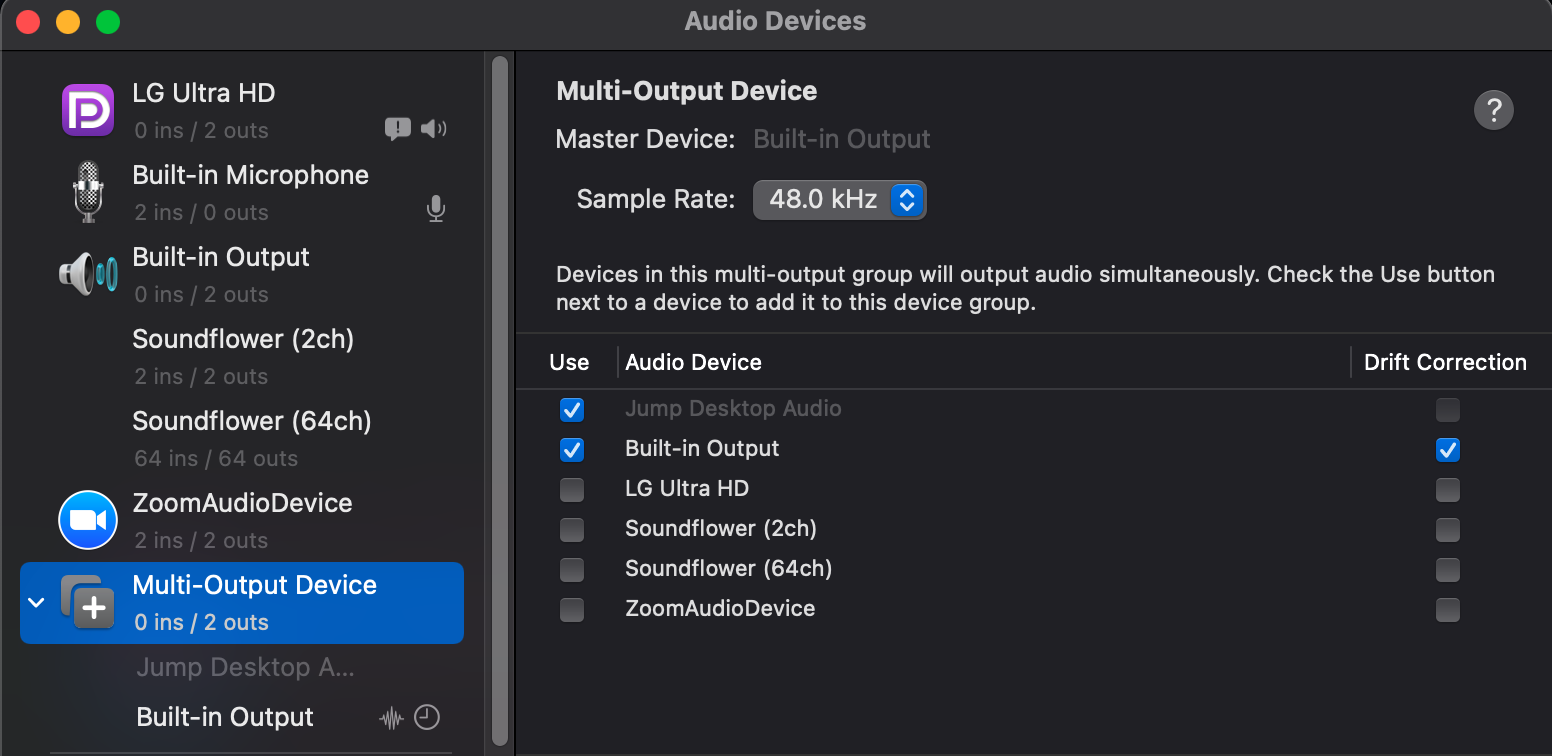
- Click + > Create Multi-Output Device.
-
Select Jump Desktop Audio and the speakers you want to use.
-
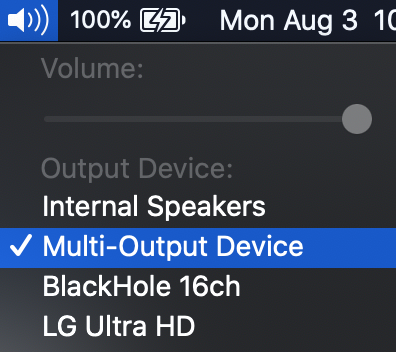
In the macOS sound menu, choose Multi-Output Device as the output.
Stop Connect switching the Mac's output
- On the remote Mac, open Jump Desktop Connect and click the settings icon.
- Click Advanced.
-
Under Fluid Remote Desktop, clear Change Audio Device.
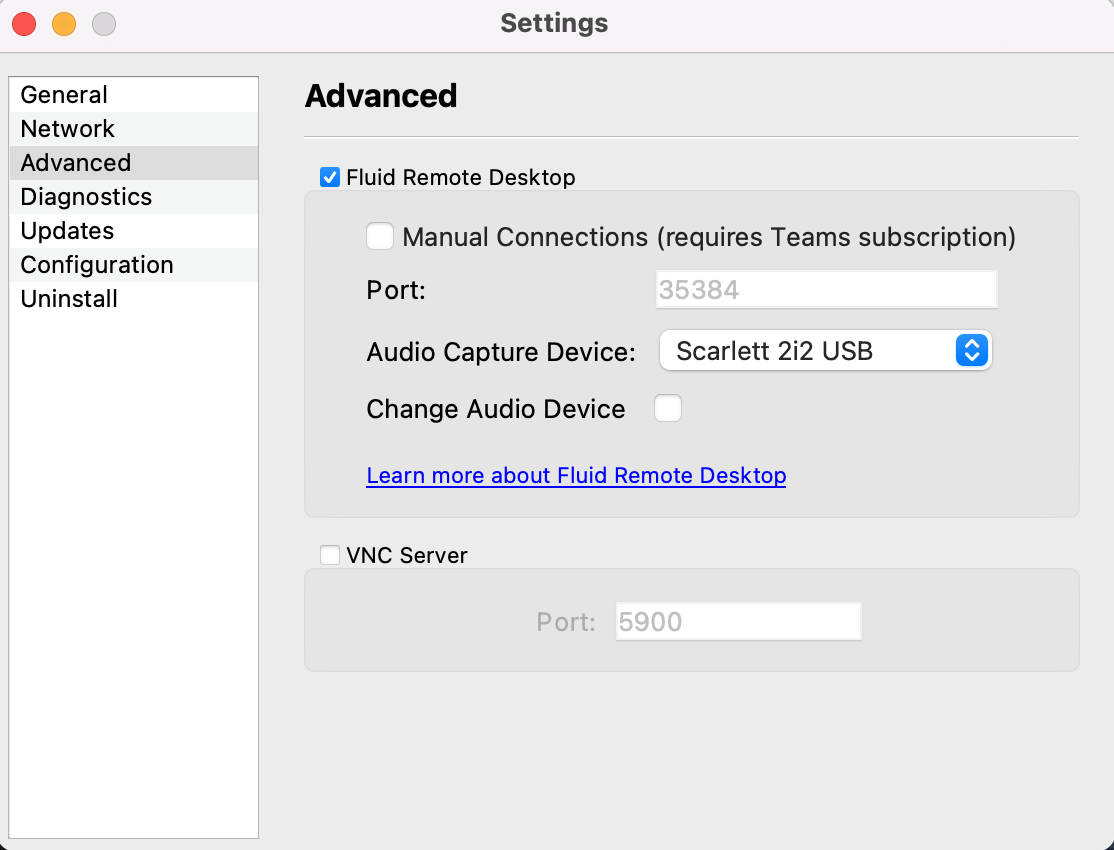
With this off, you hear only apps that output to the Audio Capture Device (normally Jump Desktop Audio).
Team administrators control this with the Change System Audio Output setting in a Connect Configuration.
Send your microphone to a remote Mac
- On your Mac, during a session, choose Remote > Audio > Send Audio, then pick your microphone.
- If the menu shows Requires microphone permission..., click it and allow Jump Desktop to use the microphone. If you denied access before, allow it in macOS privacy settings, then restart Jump Desktop.
- On the remote Mac, select Jump Desktop Microphone as the input in the app that needs it.
Choose None (Mute) to stop sending.
Limitations
- A remote Mac doesn't stream audio from the login screen.
- On Windows N editions, audio needs the Windows Media Feature Pack.